A summer afternoon on Lewisville, Ray Hubbard, Grapevine, or Texoma looks nothing like a highway, and that is exactly the problem. There are no lanes, no signals, no brake lights, and a cooler is standard equipment. People who would never open a beer behind the wheel of a car think nothing of it behind the wheel of a boat. When that ends badly in Texas, the question of who answers for it is more complicated than the person holding the throttle.
Texas Calls It BWI, and the Standard Is the Same as Driving
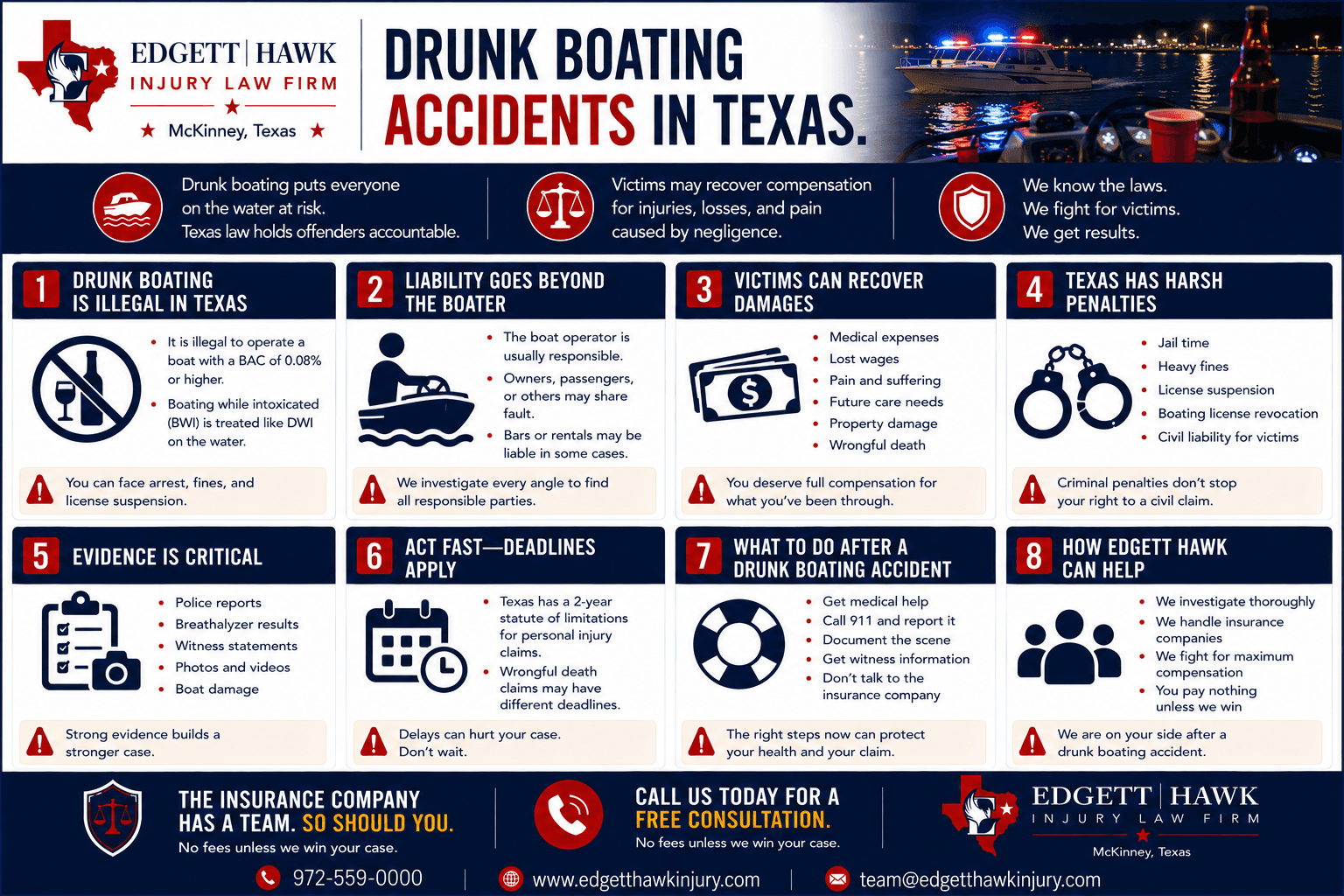
You will see this written up as BUI in a lot of places. In Texas the offense is Boating While Intoxicated under Section 49.06 of the Penal Code, and the threshold is identical to a DWI: a blood alcohol concentration of 0.08, or the loss of the normal use of your mental or physical faculties.The definition of watercraft is wider than most people expect. It is not limited to motorboats. It reaches vessels generally, and also water skis and aquaplanes, which means the intoxication rules follow people well past the point where they think they have stopped operating anything.
Why the Operator Is Only the Starting Point
Most people assume a drunk boating case is a one defendant case. It frequently is not, and that matters because recreational boaters often carry thin coverage or none at all. A judgment against someone with a boat loan and no policy does not pay for a spinal surgery.The realistic question is not just who caused it. It is who else had a duty they ignored, and which of them carries insurance.
The Owner Who Handed Over the Keys
Boats get loaned casually in a way cars do not. Someone hands the wheel to a friend halfway through the afternoon without thinking about it. Texas recognizes negligent entrustment, and it does not stop at automobiles.Where an owner lets someone operate a vessel knowing, or having reason to know, that the person was impaired, inexperienced, or reckless, that owner can be on the hook for what follows. The owner also usually has the policy that actually covers the boat.
The Rental Company
Rental and charter operations are commercial businesses, and they carry commercial duties along with commercial insurance. Two failures come up repeatedly:
- Renting to a customer who was visibly intoxicated at the counter or at the dock
- Renting to someone with no meaningful experience and no real instruction
- Sending out a vessel with failing steering, throttle, or safety equipment
- Skipping required safety briefings or shorting the life jacket count
Rental paperwork is worth pulling immediately. Waivers, condition checklists, and maintenance logs tend to say more than the company intends, and dock camera footage does not survive long.
The Bar or Marina That Kept Serving
Texas dram shop liability under Section 2.02 of the Alcoholic Beverage Code is not limited to people who arrive by car. A lakeside bar, a marina restaurant, or any licensed provider can face a claim if it was apparent that the customer was obviously intoxicated to the point of being a clear danger, and that intoxication was a proximate cause of the harm.Texas courts want direct evidence of visible impairment at the time of service. Working backward from a blood alcohol result is not enough by itself, which is why tabs, card transactions, and staff identities are worth chasing in the first weeks rather than the sixth month.
Passengers Are Not Out of Luck
There is a widespread belief that getting on the boat voluntarily means accepting whatever happens. It does not. A passenger injured by an operator's negligence has a claim against that operator, including when it was the boat they chose to ride on.Being on board does not waive anything. What it does do is complicate the social dynamics of the claim, because the defendant is often someone you know. That is what the insurance policy exists for.
The Evidence Problem Is Worse on the Water
A highway crash leaves skid marks, traffic cameras, dashcams, and a police report generated within the hour. A lake gives you almost none of that. The scene disperses before anyone thinks about documenting it, and witnesses leave on their own boats without exchanging anything.
- Photograph the vessels, the damage, the registration numbers, and any visible alcohol
- Get names and phone numbers from everyone aboard every boat involved
- Note the marina, the ramp used, and where the group had been drinking
- Ask nearby boaters for contact information before they pull away
- Get medical attention on shore even if you feel fine
Where the group was drinking is the detail people forget, and it is the one that opens a dram shop claim later.
Texas Requires You to Report It, and Fast
Chapter 31 of the Texas Parks and Wildlife Code sets reporting obligations that have no highway equivalent. If someone was killed, disappeared from a vessel, was injured beyond first aid, or property damage exceeds $2,000, the accident has to be reported to Texas Parks and Wildlife by the quickest means available.The written report follows within 30 days, and within 48 hours where there was a death. That report becomes a foundational document in any later claim, so it is worth making sure it is accurate rather than letting someone else's version stand.
Which Law Applies Depends on Where You Were Floating
This is the part almost nobody mentions, and it can quietly decide a case. Texas law is not automatically the law that governs a boating injury. Federal maritime law reaches incidents on navigable waters, and where it applies it brings different damages rules, different procedures, and a different clock.The ordinary Texas deadline is two years under Section 16.003 of the Civil Practice and Remedies Code. Maritime claims generally run three years under 46 U.S.C. Section 30106. Whether a particular Texas lake or waterway qualifies is a fact specific question that turns on its connection to interstate commerce, and it is genuinely litigated. Nobody should assume they have the longer deadline, and nobody should assume the shorter one is the end of the conversation either.
Is It Illegal to Drink and Operate a Boat in Texas?
Yes. Section 49.06 of the Texas Penal Code makes it an offense to operate a watercraft while intoxicated, using the same threshold as driving: a blood alcohol concentration of 0.08 or the loss of normal use of your mental or physical faculties. Texas calls it Boating While Intoxicated, or BWI, and the definition of watercraft is broad enough to include water skis and aquaplanes.
Who Can Be Held Liable After a Drunk Boating Accident in Texas?
The intoxicated operator is the starting point, not the end of it. Depending on the facts, the boat owner who handed over the keys, a rental company that put an obviously impaired customer on the water or failed to maintain the vessel, and a bar or marina that overserved the operator can all be brought into the same claim.
Do I Have to Report a Boating Accident in Texas?
Yes, and quickly. Under Chapter 31 of the Texas Parks and Wildlife Code, accidents involving death, disappearance, injury beyond first aid, or property damage over $2,000 must be reported to Texas Parks and Wildlife by the fastest means available. The written report is due within 30 days, and within 48 hours if someone died.
How Long Do I Have to File a Boating Accident Claim in Texas?
Usually two years from the date of the crash under Section 16.003 of the Civil Practice and Remedies Code. But if the accident happened on water that qualifies as navigable, federal maritime law can apply instead and carry a three year deadline under 46 U.S.C. Section 30106. Which one governs is a fact question about the body of water, and it is not safe to assume.
Hurt on a North Texas Lake? Do Not Wait for the Season to End
Boating cases get harder with every week that passes. Witnesses were strangers, footage gets overwritten, bar receipts get purged, and the boat itself gets repaired before anyone inspects it.If you or someone in your family was hurt in a boating accident on Lewisville, Ray Hubbard, Grapevine, Texoma, or anywhere else in North Texas, Edgett Hawk Injury Law Firm in McKinney can identify every party with a duty and a policy before that evidence is gone. Scott Edgett and Michael Hawk have spent decades untangling multi defendant injury claims. Call us for a free consultation. There is no obligation, and you pay nothing unless we recover for you.